Beyond communications. Full shipping workflows.
Your team manages chartering, S&P, post-fixture, and laytime without ever leaving their communications environment.
Vessel Database
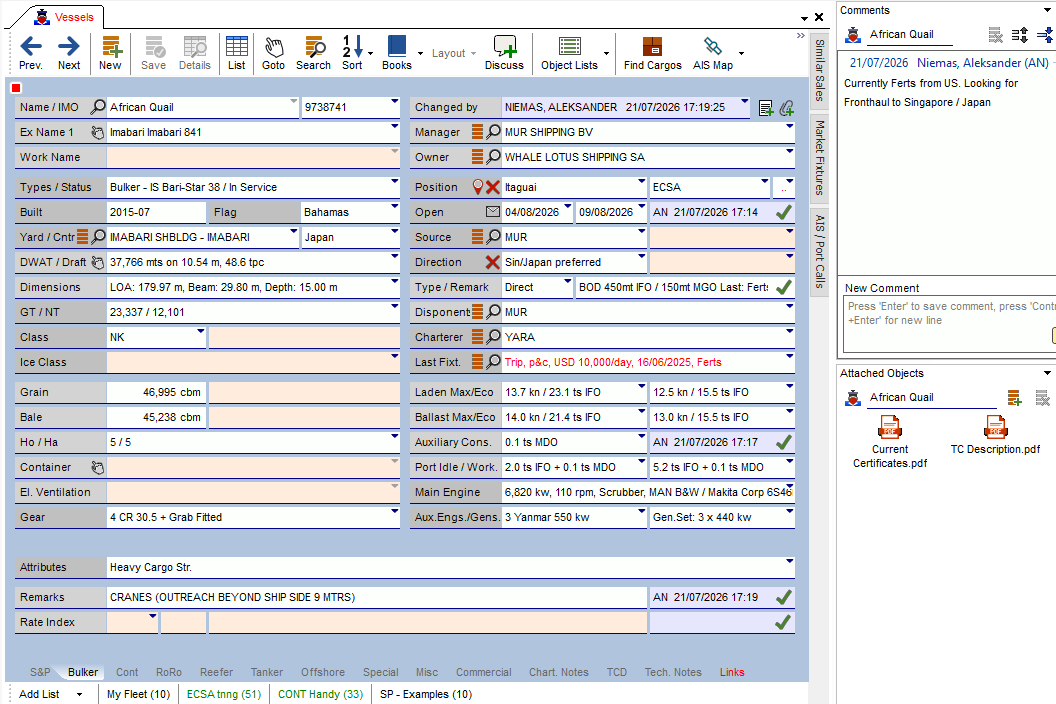
The vessel is at the centre of SYSTEM 5 shipping modules. Store complete records for every ship — type-specific descriptions, remarks and documents — linked directly to your chartering and S&P workflows.
- 200+ description fields across all major vessel types — bulker, container, tanker, RoRo, reefer, offshore, and special ships — with type-specific layouts and customizable attributes
- Position management — capture multiple opening positions with controlling parties, disponent chains, directions, position types, and remarks; positions update automatically as new information comes in
- Chartering notes and links — capture chartering and technical notes, TC descriptions, and next drydock dates; link directly to matching cargoes, fixtures, voyage estimations, laytime calculations, Equasis and sanctions lists
- Full team workflow — alert colleagues, set reminders, assign vessels to to-do lists, attach messages and documents, and track all changes centrally with complete change history
- Search and export — dynamic search filters across all vessel criteria, AIS integration for live and historical positions, and flexible export via print reports or Excel — directly into an email if needed
Advanced Position Management
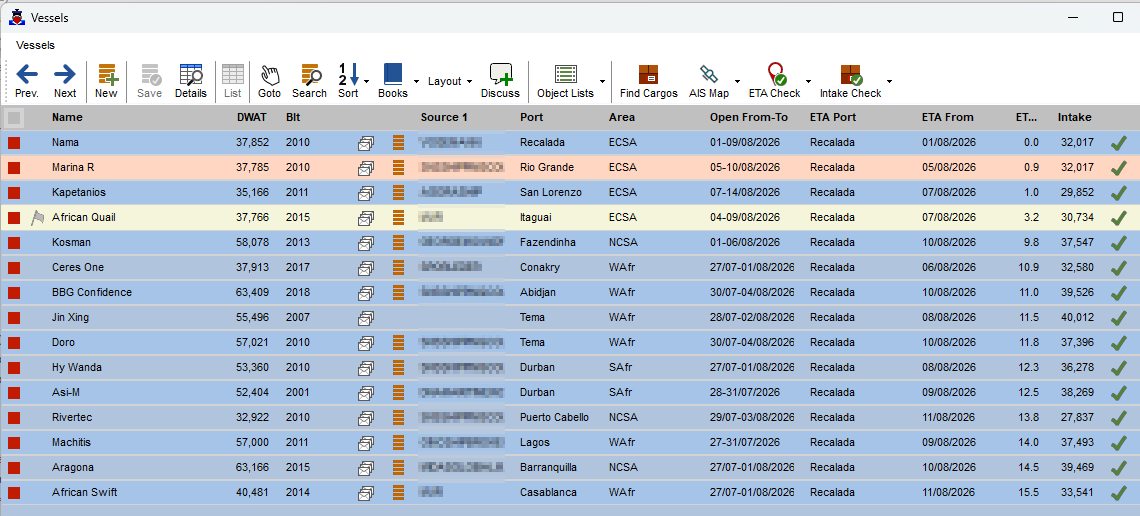
SYSTEM 5 reads your incoming chartering emails and keeps vessel positions current automatically — opening dates, ports, directions, and sources captured without manual entry, with every message linked directly to the vessel record.
- Automatic position extraction — reads incoming position circulars and updates opening ports, dates, directions, and preferred sources directly in the database; links the message to the vessel for instant reference
- Laycan matching and ETA check — search vessels by region and opening date, include ballasters via the internal ballast table, and run the ETA check to calculate which ships can actually make your laycan against a specific port and date
- Source management and bulk outreach — capture the right contact per vessel automatically or manually, then commit a shortlist to a cargo with one bulk message — each vessel's source addressed individually in a single send
- Intake and cargo potential check — run an intake calculation against vessel particulars to verify minimum quantity requirements, draft restrictions, and stowage factors; quickly evaluate each ship's cargo potential for any given requirement
- AIS-integrated position search — include off-market AIS positions alongside reported positions, track vessels heading into a specific region or port laden or in ballast, and monitor your customers' or competitors' fleet movements in real time
Cargo Radar
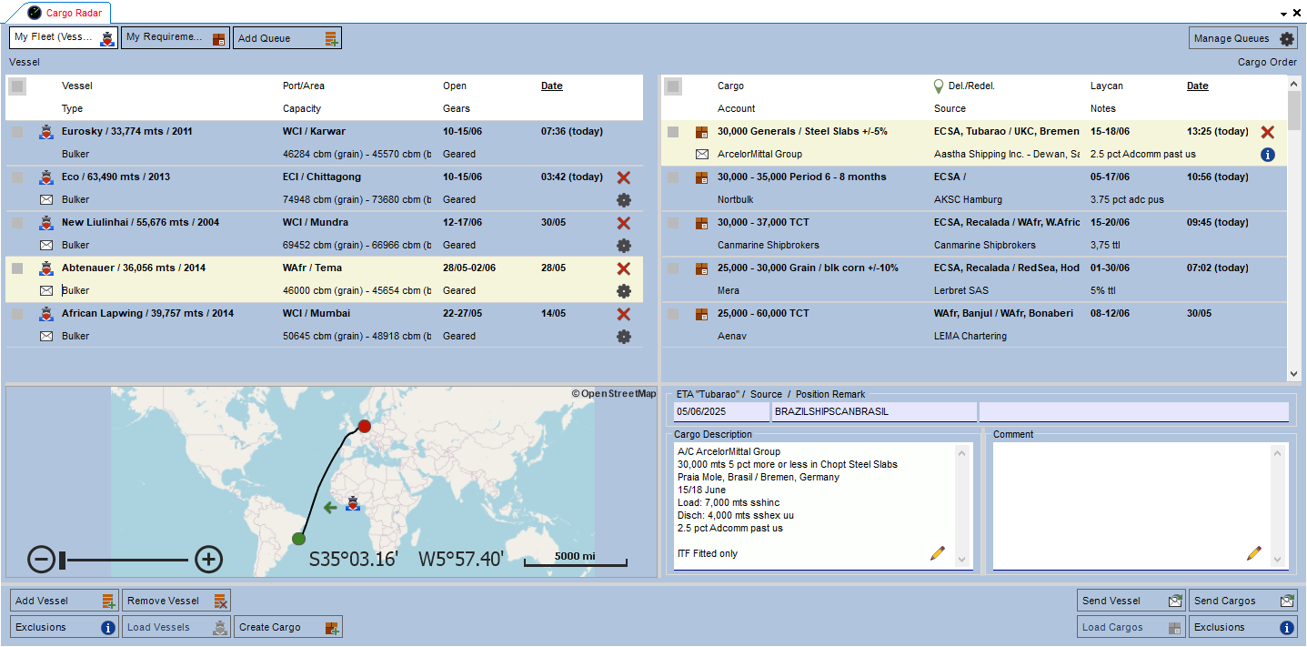
From the moment a cargo order arrives in your inbox, SYSTEM 5 captures it, stores it, and matches it against your vessels — automatically. No manual re-entry, no missed opportunities.
- Automatic Cargo Updater — reads incoming cargo emails and creates structured cargo records automatically, capturing load and discharge ports, account, fixture type (voyage, TC, or period), and counterparty; duplicates are flagged so nothing gets worked twice
- Searchable cargo database — query by region, vessel size, fixture type, or date; view all linked messages per cargo
- Vessel matching and source commitment — finds matching vessels directly from the cargo record and commit a list of vessel sources in one bulk send; or flip it and find matching cargoes for any given ship
- Cargo Radar — run multiple simultaneous matching queues based on your fleet list, a specific cargo requirement, or any given region; manage your preferred opportunities and stay on top of every match as it develops
Fixtures
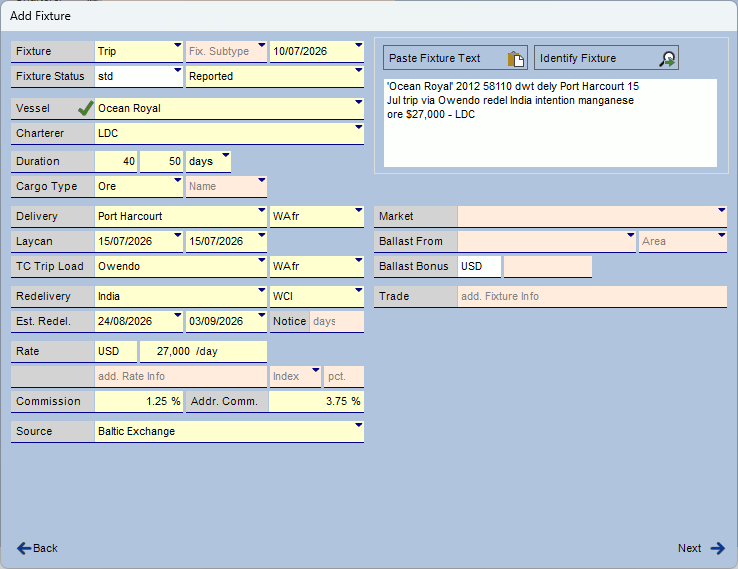
A fixture database that builds market awareness — and gives you the knowledge to guide your customers when it matters.
- Fixture database — record own and market fixtures, capture directly from the Baltic Fixtures list, and run dynamic search filters by size, region, or counterparty to find relevant market references instantly
- Forward position capture — once a vessel is fixed, its next opening position is captured automatically in the vessel database, giving you an immediate head start on the next fixture; current charter and last fixture stay linked directly on the ship
- Market intelligence — review all market fixtures under any given vessel to guide principals on current levels for that ship size and region; comparable fixtures always one click away
- Fixture reports — generate tailored fixture reports for customers and owners in a consistent, professional format every time
- Full connectivity — every fixture linked to its vessel and counterparty; the complete picture always accessible from any direction
Voyage Estimation
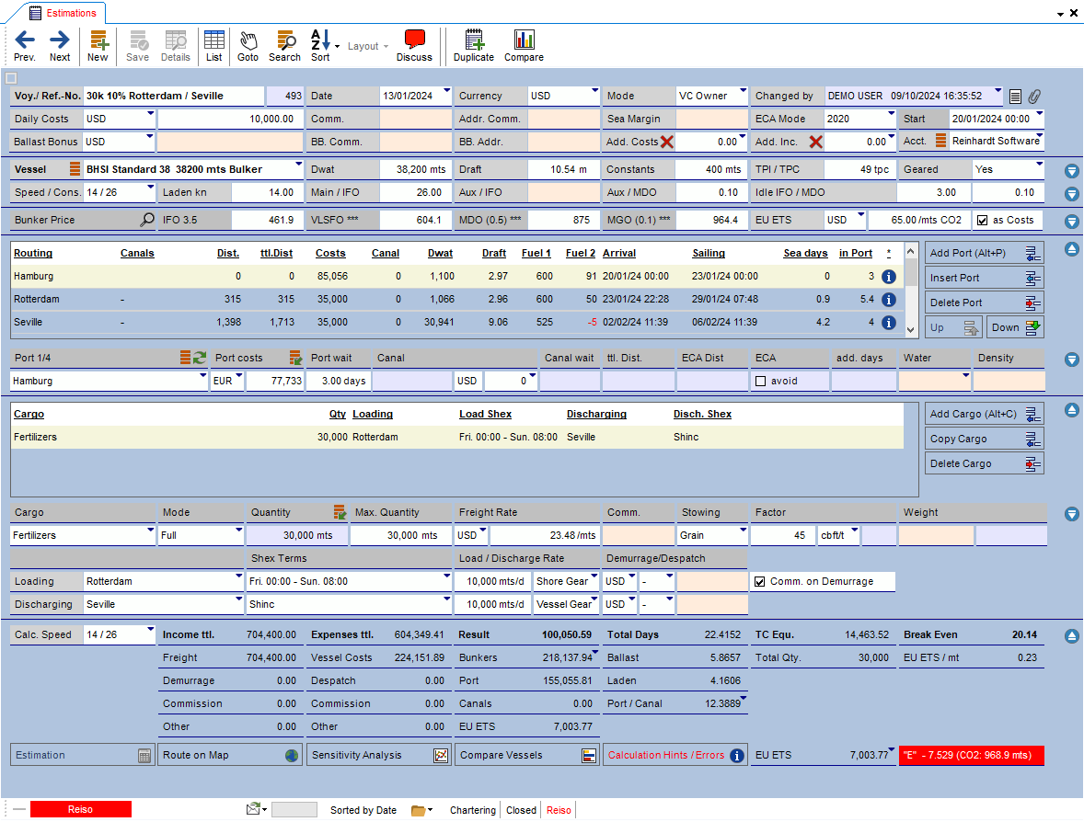
Calculate voyage profitability before you fix — with realistic routing, current bunker costs, port charges, and full regulatory cost coverage.
- Flexible calculation — estimate any voyage fixture or TC repositioning, with support for multiple cargoes and various port rotations in a single calculation; pull vessel descriptions directly from your vessel database and run multiple speed and consumption profiles per vessel
- Regulatory costs built in — CII, CO₂, ETS, and FuelEU calculations included, so the full compliance cost picture is always visible before you commit
- Port costs and routing — retrieve port costs directly from the SYSTEM 5 central port database; multiple routing options including canal transits
- Sensitivity analysis — run what-if scenarios across bunker prices, freight rates, and total result; analyse TCE versus freight rate to find the optimal position before negotiating
- Multi-vessel and multi-cargo comparison — compare multiple vessels side by side based on individual position, intake, speed, and consumption on a given cargo; or compare multiple cargoes across the same vessel to identify the best opportunity
Distance Table
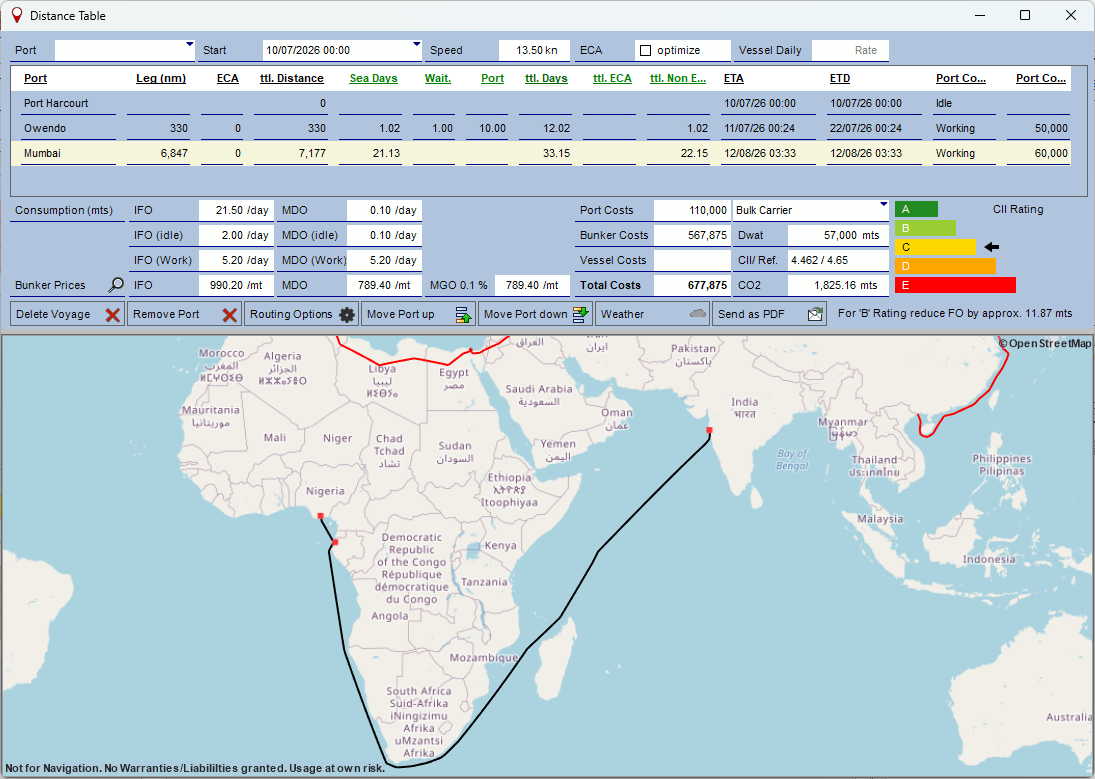
A fully owned and maintained distance table, built directly into SYSTEM 5 — no third-party service, no external dependency.
- 2,700+ ports and 25,000+ routing points — comprehensive coverage of all major shipping routes, with canal options and ECA-optimised routing built in
- Integrated across modules — feeds directly into voyage estimation and ETA calculations in the vessel position database
- Quick port-to-port routing — calculate ETA based on date, time, and speed for any vessel; adjust canal transits and routing preferences on the fly
- Central port database — store port costs, agents, terminals, and further port-specific information in one shared location, accessible across all SYSTEM 5 modules
- Basic vessel calculations — run quick cost and routing calculations based on vessel specs directly from the distance table and share results with customers in seconds
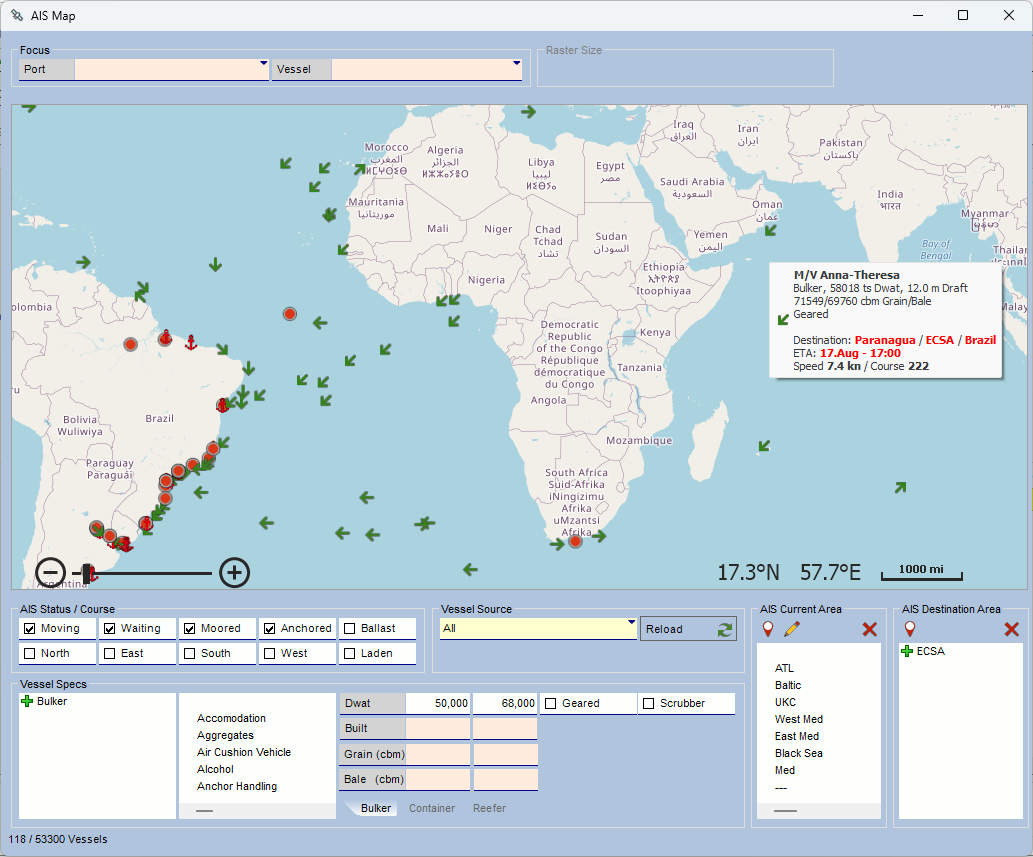
AIS Tracking
Real-time vessel tracking integrated directly into your chartering workflow — combining live AIS positions with your vessel database, position list, and market intelligence. Available as an optional add-on with external subscription.
- Fleet and database overview — review your complete vessel database with live AIS positions overlaid; see where every ship in your database is trading at any given moment
- Customer and competitor monitoring — build custom fleet lists for customers or competitors and track their vessels' current positions and trading patterns in real time
- Off-market position enrichment — activate AIS off-market searches to find vessels heading into a specific region or port, combining live movement data with your reported position list for a complete market picture
- Voyage validation — review historical port calls, speed and draft performance, and 30-day track to validate whether a vessel is genuinely open and can make your laycan
- Fully integrated — AIS data combines directly with vessel database records, position searches, and ETA calculations — all within your chartering workflow, without switching tools
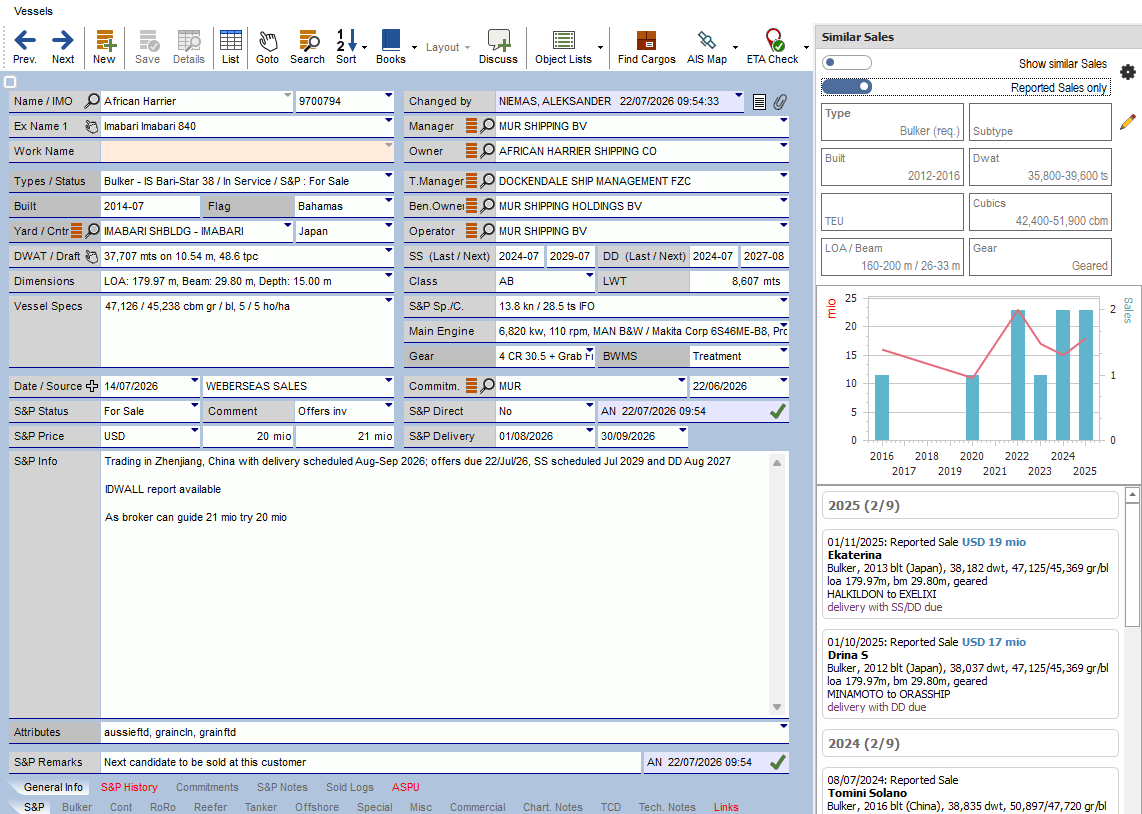
S&P Vessel Database
A dedicated vessel database built for S&P brokers — every ship tracked from first approach to concluded deal, with the full market picture always accessible to the whole team.
- Complete vessel records — over 200 description fields capturing every detail, with type-specific layouts, remarks, attachments, comments, and full workflow functionality. All with the full change history.
- Ownership history and fleet overview — full ownership and name change history captured per vessel, with direct links to sister ships and their ownership records; review the complete fleet any owner or operator is controlling at a glance.
- S&P pipeline tracking — dedicated front page per vessel capturing status, price, source, commitments, and general sales information; sold log created automatically on conclusion; dynamic search filters keep your pipeline current
- S&P history and market intelligence — capture market conversations and intelligence gathered over time on any given ship; review similar historical sales directly from the vessel record to guide principals on current market levels
- Commitment management and bulk outreach — maintain a list of committed buyers per vessel and keep them informed with targeted bulk emails using attributes and bulk messaging
- Purchase inquiry matching — search for matching purchase inquiries directly from any vessel record; dynamic filters surface the newest updated ships matching any given requirement
- Export and reporting — generate print reports in a consistent, professional format with as much or as little detail as required; extract directly into an email, excel or pdf document for customer distribution
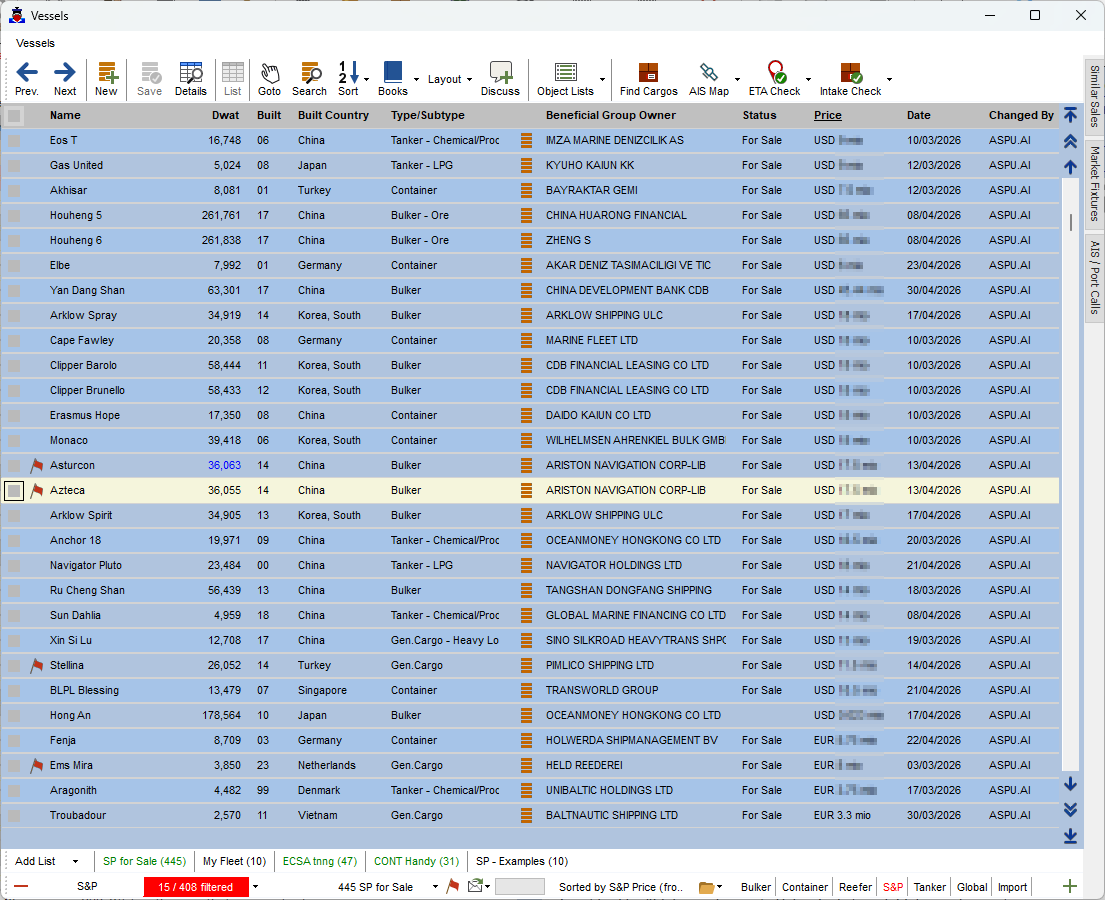
Automatic S&P Updater
The Automatic S&P Updater extracts and files market intelligence from every incoming email — so your database reflects the market in real time, not after a manual update session.
- Automatic message linking — every incoming S&P circular linked directly to the relevant vessel record, and every vessel linked back to all related messages; nothing needs to be filed manually
- For-sale and purchase inquiry recognition — identifies vessels being offered for sale and incoming purchase inquiries automatically, creating or updating the relevant records in the database
- S&P history generation — automatically creates S&P history entries with a summary of each email, building a running market intelligence log on every ship without any manual input
- Price and status updates — captures updated price levels, marks vessels as sold, and keeps listing status current as new information arrives
- Reduced admin across the desk — less time spent updating, filing, and cross-referencing; more time spent on the actual business
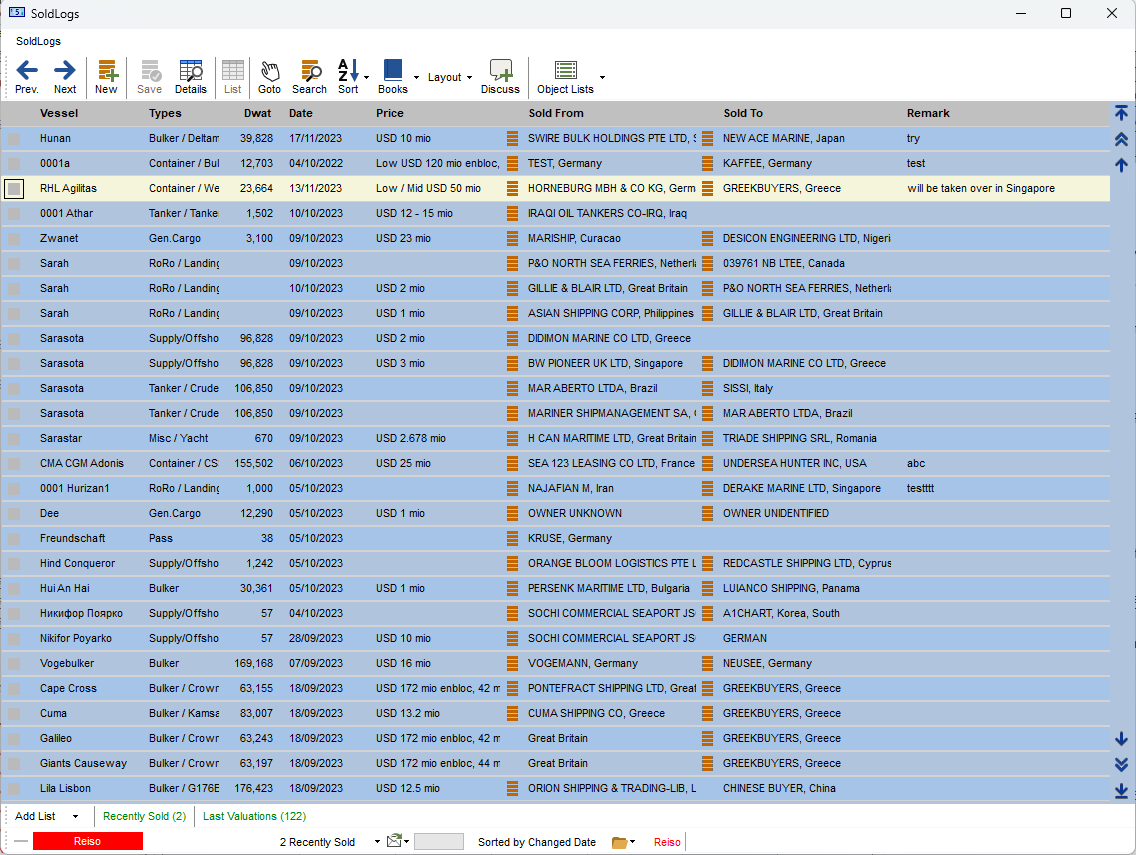
Sold Logs
A dedicated database of concluded S&P transactions — separate from the vessel record itself, so the full sales history is never lost when ownership changes or a ship is renamed.
- Complete transaction records — capture buyer, seller, price, and key deal terms for every concluded sale; log on-block sales, individual transactions, and scrapings with lightweight ton prices
- Permanent history regardless of vessel status — sold logs are stored independently of the vessel record, so the history survives name changes, ownership transfers, and status updates; nothing is overwritten or lost
- New ownership updates — once a sale is logged, vessel ownership updates directly in the S&P section of the vessel database, keeping every record current without duplicate entry
- Valuation and market reference — create lightweight valuation logs to track where the market is trading; all sold logs surface directly in the similar sales view within the vessel database for instant market guidance
- Full search and filtering — dynamic search filters across all concluded transactions by vessel type, size, region, price, or date; always know what the market has done recently on any comparable ship
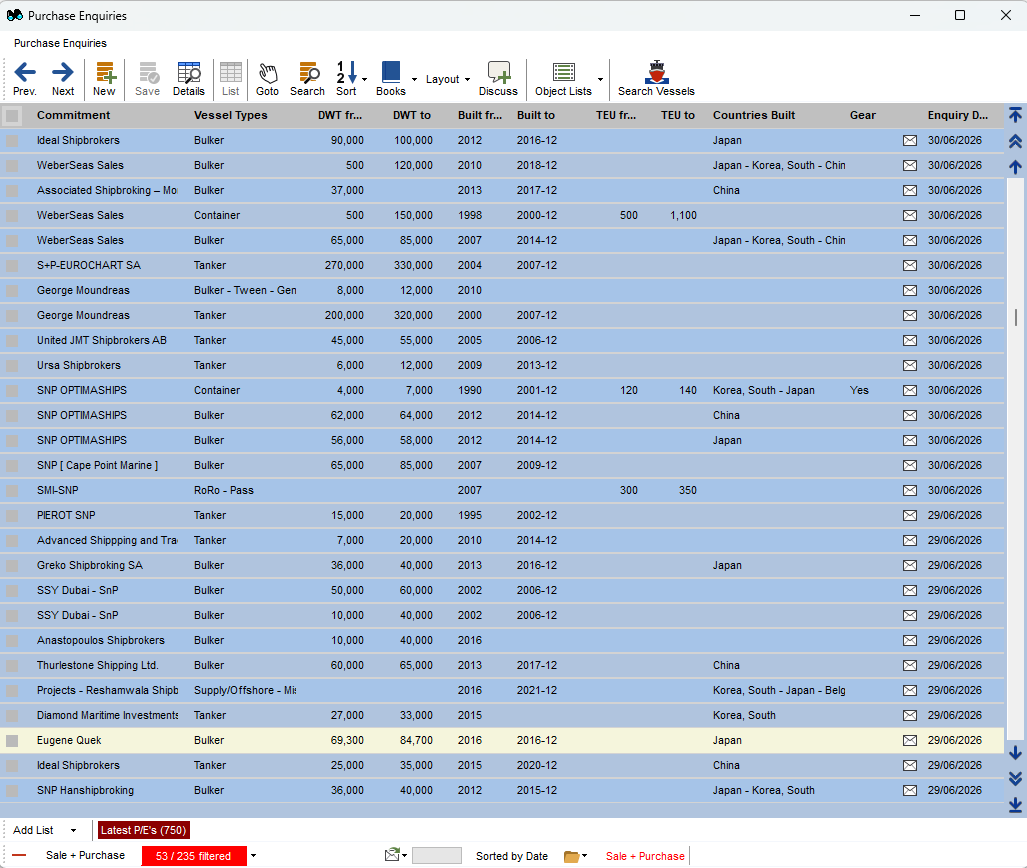
Purchase Enquiries
A structured database of buyer requirements — automatically populated from incoming emails and always searchable against your vessel listings.
- Automatic purchase inquiry recognition — identifies buyer requirements in incoming emails and captures them as structured records; type, size, age, specifications, and preferred build countries all logged without manual entry
- Structured requirement tracking — every inquiry recorded with full buyer specifications; filter across the database by vessel type, size, age, or build country to find matching opportunities instantly
- Vessel matching — review all matching purchase inquiries directly from any vessel record, and flip it the other way — look up all vessels currently for sale that match any given purchase inquiry; the connection works in both directions.
- Pipeline visibility — track status and commitments across all active buyer requirements; full history attached to every inquiry and counterparty
Voyage & Time Charter Operations
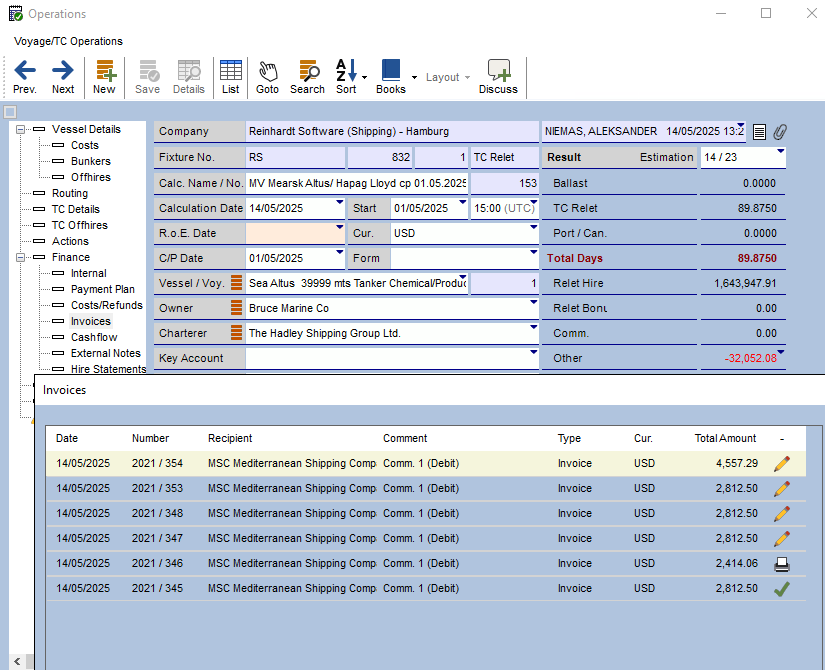
A straightforward post-fixture management tool for ship owners, operators, and brokers — covering the essentials of voyage and TC operations without the complexity of a full voyage management system.
- Actual vs. estimated voyage result — compare your final voyage outcome against the initial estimation; the core of the module and the number that matters most
- Multiple cargoes and destinations — handle multiple cargoes with various port rotations, terms, and destinations within a single voyage record
- Freight and hire invoicing — generate freight invoices for voyage charters and hire invoices for time charters; detailed payment plans tracking debits, credits, and outstanding balances
- Off-hires, deviations, and additional costs — capture off-hires, dead freight, freight changes, additional costs, and refunds as they occur throughout the voyage
- Freight and hire statements — consolidated statements with all linked invoices and payments in one place
- Laytime conversion — convert main terms directly into a laytime calculation without re-entering data
- Commission invoice base — voyage and TC records feed directly into the commission invoicing module, making this the natural starting point for shipbrokers managing their brokerage
Commission Invoicing
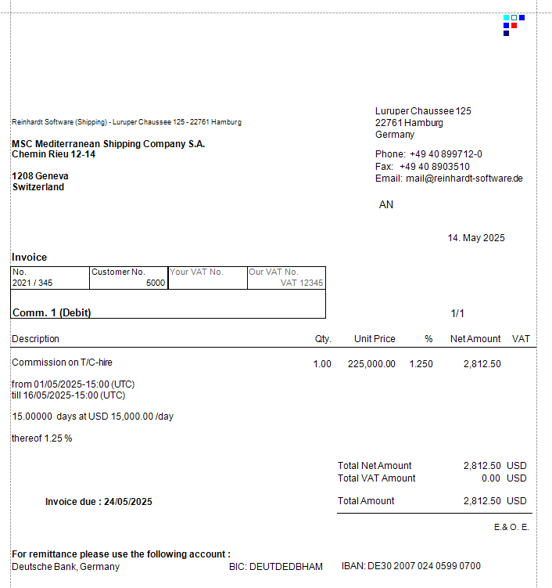
A dedicated commission invoicing solution for shipbrokers — covering voyage charter, time charter, and S&P transactions in one compliant, fully integrated system. No more invoices generated from Word or Excel.
- E-invoicing — fully compliant electronic invoicing in line with current and upcoming regulatory requirements
- Fixture-based commission invoicing — generate commission invoices directly from voyage charter or time charter records; off-hires and additional costs are factored in automatically so the commission calculation is always accurate
- Non-fixture invoicing — capture any additional costs or income not linked to a fixture like an S&P commission; a complete picture of all invoices written and payments received in one place
- Compliant consecutive invoicing — every invoice assigned a unique, sequential number through a full accounting process; cancelled invoices create a credit note within the system — nothing deleted, nothing overwritten, full audit trail maintained
- Multiple invoicing entities — set up multiple companies within the system, each with their own bank details, consecutive invoice numbering, and dedicated debtor and creditor database for managing contractual partners independently
- Payment tracking and cashflow overview — track incoming payments, monitor outstanding balances, and analyse cashflow by customer, broker, vessel, or fixture; everyone on the desk sees the same financial picture
- Multi-currency support — handles multiple currencies across all entities
Laytime Calculation
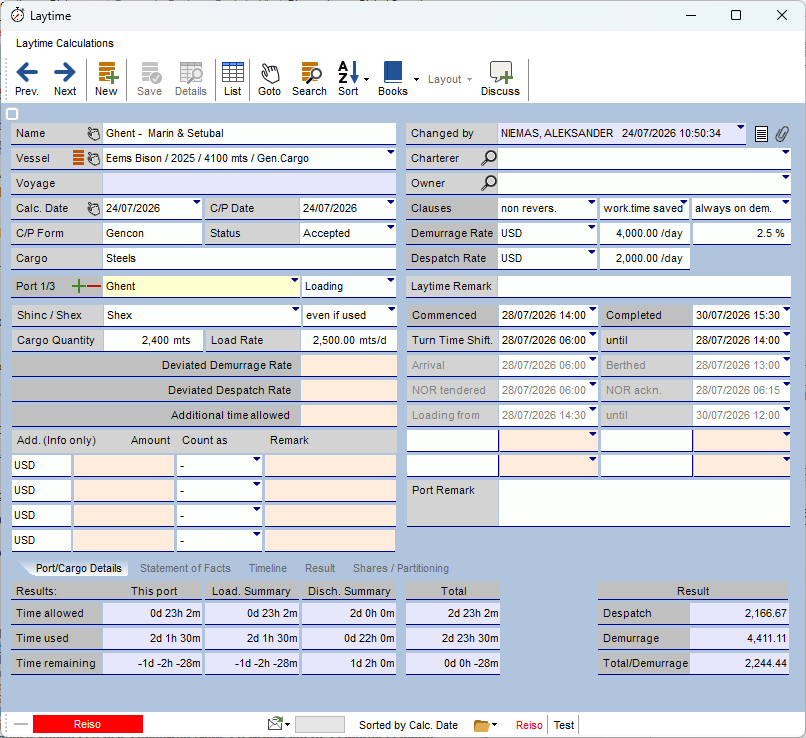
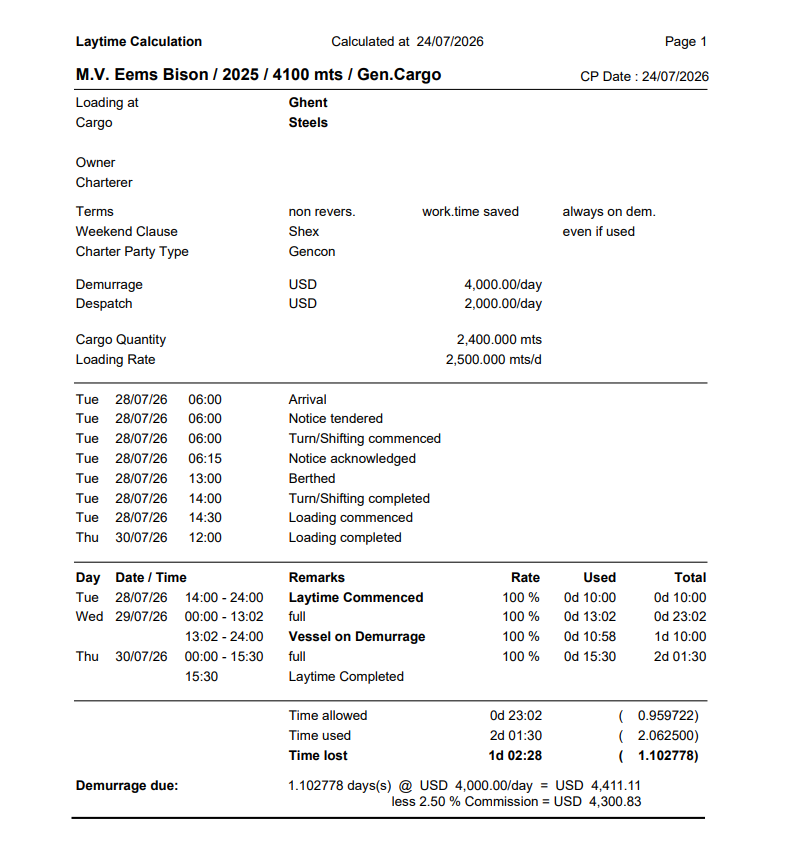
Apply charter party terms to port events. Multiple scenarios, exception handling, defensible calculation statements.
- Comprehensive clause coverage — all standard laytime clauses supported, with over 45 SHEX term variations; handles the full range of charter party conditions without workarounds
- Port-level demurrage and despatch — deviated demurrage and despatch rates configurable per individual port; accurate calculations regardless of how complex the port rotation
- Flexible time counting — adjustable time events, prorated time to count with decimals, and time to count above 100% for specialist trades including the sugar trade
- Statement of Facts — structured SOF input with 7 different break types; clean, professional output ready to share with counterparties and defend in a dispute
- Multiple scenarios — copy laytimes to run alternative calculations against the same port events to model different interpretations of the charter party terms before committing to a position
- Shares and partitioning — distribute the laytime result across up to 4 partitions for multi-cargo or shared laytime arrangements
- Direct conversion from post-fixture — main terms convert directly from the voyage operation record without re-entering data; laytime feeds back into the voyage result